
API and Microservices Penetration Testing
API and Microservices Penetration Testing
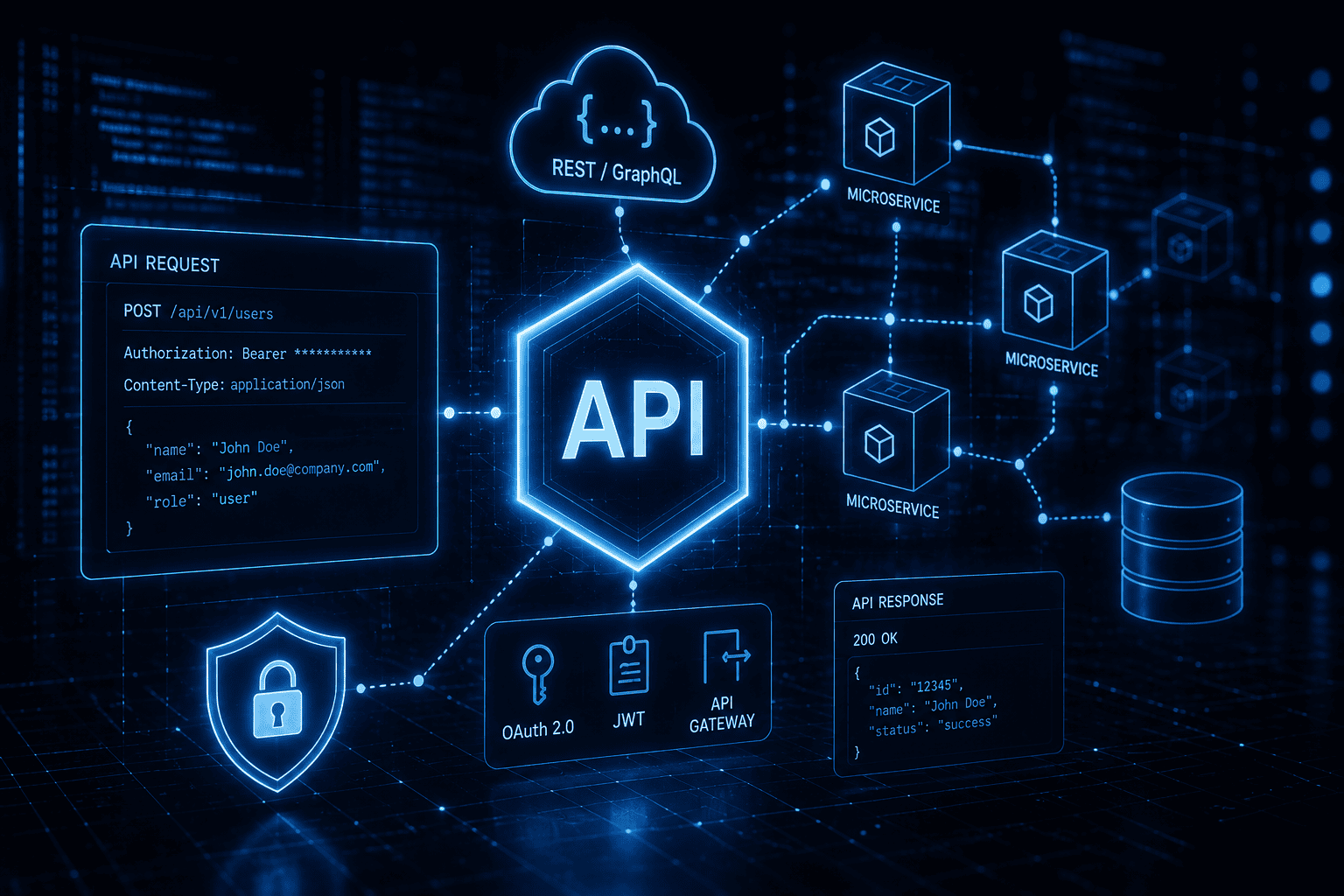
We test the security of REST, GraphQL, and other APIs by simulating real-world cyberattacks. API penetration testing helps identify vulnerabilities in authentication, authorization, OAuth, JWT, API gateways, input validation, and communication between microservices before attackers can exploit them. Our certified ethical hackers perform API security testing in line with the OWASP API Security Top 10, manually verifying each finding and providing proof of exploitability and clear recommendations for remediation.
Request a Penetration Test
Why Test APIs and Microservices?
Protection of Sensitive Data
We verify whether APIs properly protect personal data, business information, authentication tokens, API keys, and other sensitive data.
Prevention of Unauthorized Access
We identify vulnerabilities that could allow attackers to access functions or data without the required permissions.
Support for Compliance with Security Standards
Penetration testing results support compliance with the requirements of NIS2, DORA, ISO 27001, PCI DSS, and other security standards.
Stronger Application Ecosystem Security
Regular API penetration testing helps identify weaknesses in communication between applications and microservices and improves the resilience of the entire environment against cyberattacks.
What We Test
REST APIs
GraphQL APIs
Authentication and Authorization
Input Validation
Microservices
API Gateway
What API Penetration Testing Can Reveal
We verify whether manipulating object identifiers can provide unauthorized access to other users’ data or resources.
We test login mechanisms, API tokens, OAuth, JWT, and other authentication controls that, if compromised, could lead to account takeover.
We verify whether users can access API functions for which they do not have the required permissions.
We assess whether APIs expose more information than necessary, including sensitive or internal data.
We identify misconfigurations in API servers, API gateways, authentication mechanisms, and security controls that could lead to unauthorized access.
We test API resilience against SQL Injection, NoSQL Injection, Command Injection, and other attacks involving malicious input manipulation.
We assess API protection against excessive requests, brute-force attacks, and resource abuse, including proper rate limiting.
We test the security of communication between microservices, including identity and access management and trust between individual components.
Choose Your Penetration Testing Type
Penetration Testing
Penetration testing (pentesting) simulates real-world cyberattacks to identify vulnerabilities before attackers can exploit them. Learn how penetration testing works, what types of pentests we perform, what you receive after the test, and how we help you reduce cybersecurity risks.
Learn about pentesting
Web Applications
We test web applications against attacks such as SQL Injection, Cross-Site Scripting (XSS), authentication flaws, and privilege escalation. Our web application penetration testing follows the OWASP Web Security Testing Guide and OWASP Top 10, with every finding manually verified.
Learn about web testing
Mobile Applications
Mobile application penetration testing for Android and iOS assesses the security of sensitive data, APIs, server communication, local storage, and the application's resilience against reverse engineering, rooting, jailbreaking, and other attack techniques.
Learn about mobile apps
AI and LLM Systems
We test the security of AI applications, chatbots, AI agents, and RAG systems. AI penetration testing assesses resilience against prompt injection, jailbreak attacks, sensitive data leakage, model manipulation, and abuse of external tools based on the OWASP Top 10 for LLM Applications.
Learn about AI & LLMs
Network Infrastructure and Internal Systems
We simulate attacks against internal and external infrastructure, including firewalls, VPNs, Active Directory, servers, and databases. Network penetration testing assesses network configuration, segmentation, privilege escalation, and an attacker's ability to move laterally across the environment.
Learn about infrastructure
Cloud Environments
We assess the security of AWS, Microsoft Azure, and Google Cloud Platform (GCP) environments by simulating real-world attacks. Cloud penetration testing covers IAM, cloud storage, Kubernetes, network rules, and exposed services.
Learn about cloud testing

Want to Test the Security of Your APIs?
Book a free 15-minute consultation with us and find out how we can help.
Book a Free Consultation

Sign up for our newsletter for all the important cybersecurity and ethical hacking news.
© 2024 citadelo AG. All rights reserved.


